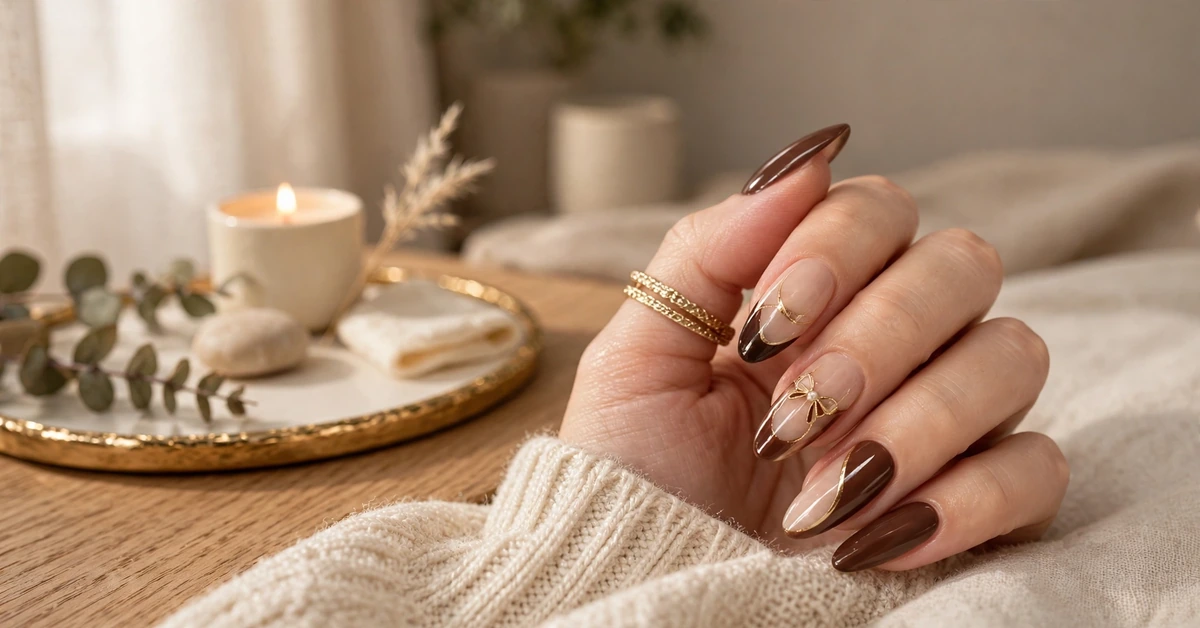
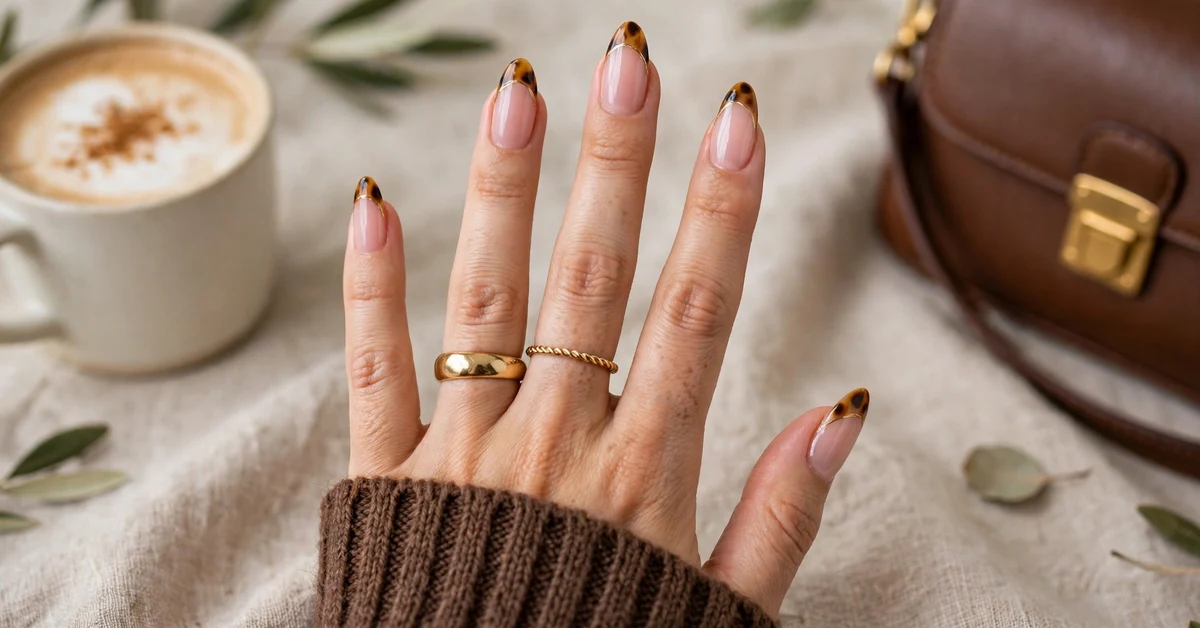
Some manicures whisper, and some make a quiet statement that everyone notices. Gorgeous tortoiseshell almond nails fall firmly into the second group. They pair a glossy nude-pink base with rich, amber-brown tortoiseshell French tips, finished with a whisper-thin gold line that makes the whole design glow. The result feels expensive, warm, and effortlessly chic — like the nail equivalent of a classic leather handbag and gold jewellery. If you have been looking for a brown nail idea that is anything but boring, this is the one to save. In this guide, we explain what makes tortoiseshell nails so flattering, how to create the mottled amber pattern step by step, and how to style and maintain the look for weeks.
Table of Contents
- What Are Tortoiseshell Nails?
- Why the Almond Shape Works So Well
- The Tortoiseshell Colour Palette
- Step-by-Step Guide to the Look
- Adding the Gold Accents
- Beautiful Variations to Try Next
- Styling Your Manicure: Outfits and Jewellery
- Salon vs DIY: What to Ask For
- Maintenance Tips for Long-Lasting Nails
- Frequently Asked Questions
- Final Thoughts
What Are Tortoiseshell Nails?
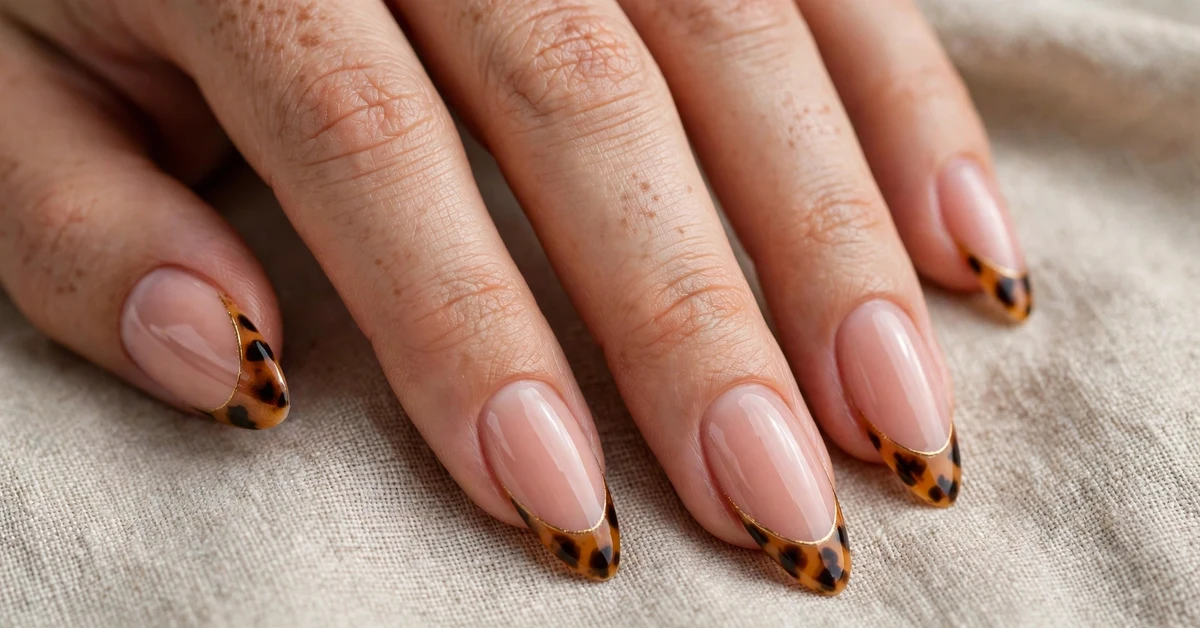
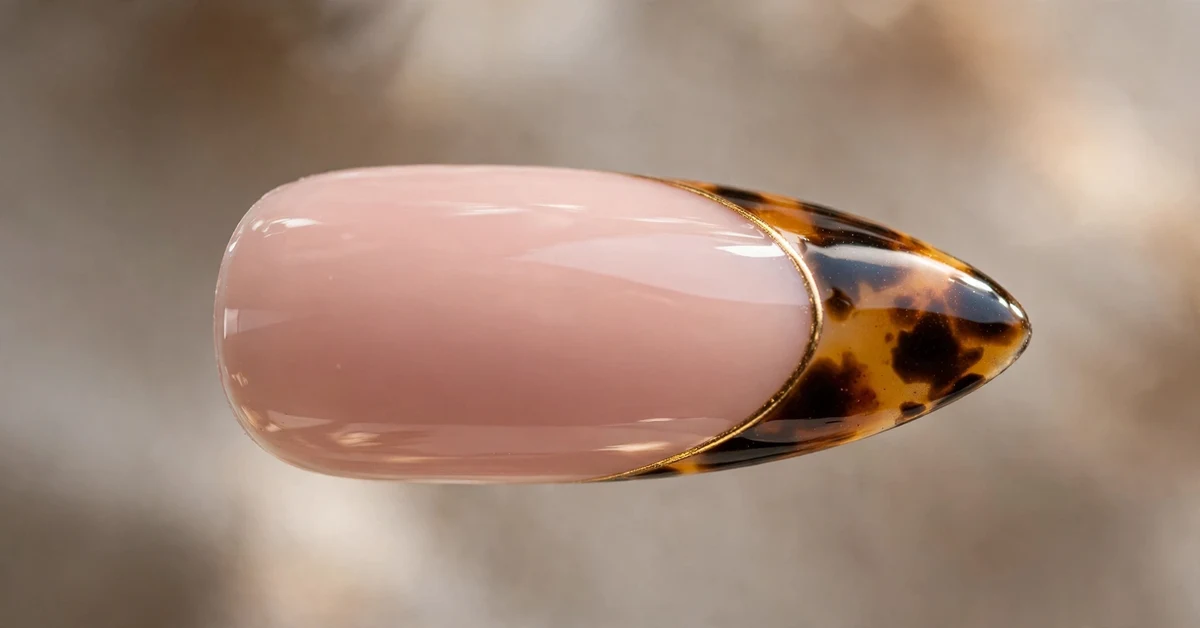
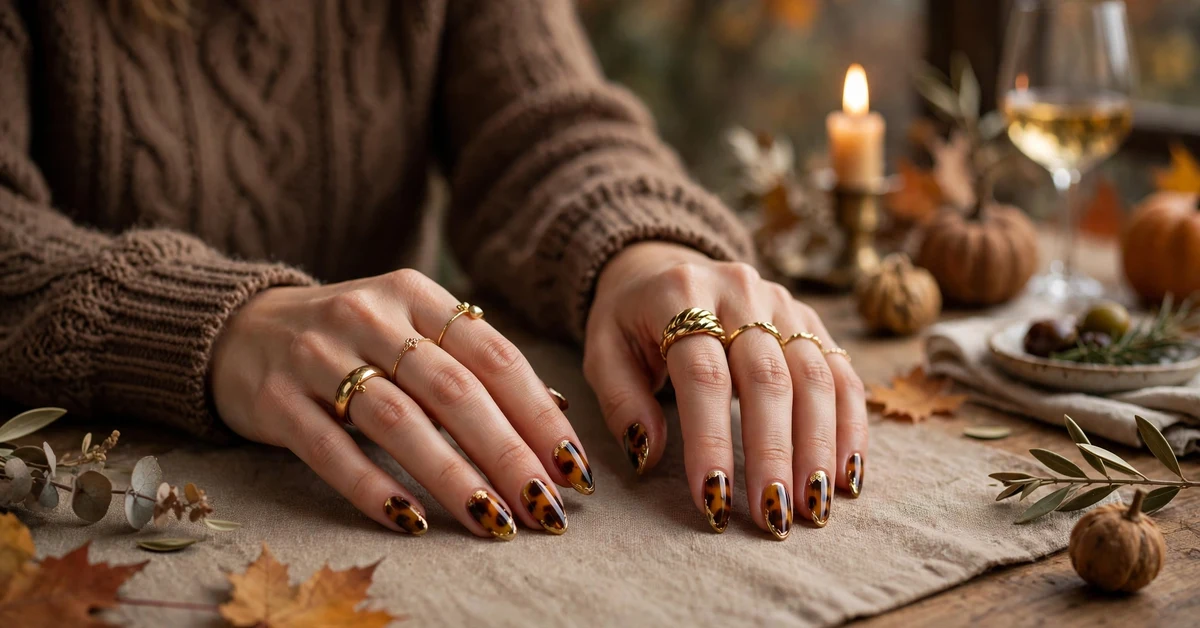
Tortoiseshell nail art takes its inspiration from the warm, mottled pattern of classic tortoiseshell accessories — think vintage sunglasses frames and hair clips. The pattern is created by layering translucent amber, honey, caramel, and dark brown shades over each other so they blend into organic, irregular blotches, just like real tortoiseshell. In this design, the pattern is kept to the French tip, while the rest of the nail stays a sheer, glossy nude pink. A fine gold line separates the tip from the base, adding a touch of luxury and making the edge look crisp and intentional.
Why the Almond Shape Works So Well
The almond shape is the perfect partner for a tortoiseshell French tip. Its soft, tapered point lengthens the fingers and gives the tip plenty of room to show off the mottled pattern — on a very short, square nail, the tortoiseshell detail would feel cramped, but on an almond nail it has space to breathe. The shape also mirrors the organic, curved feel of the tortoiseshell pattern itself, so the whole design feels harmonious rather than geometric. A medium almond length is ideal: long enough to showcase the pattern, short enough to stay practical.
The Tortoiseshell Colour Palette
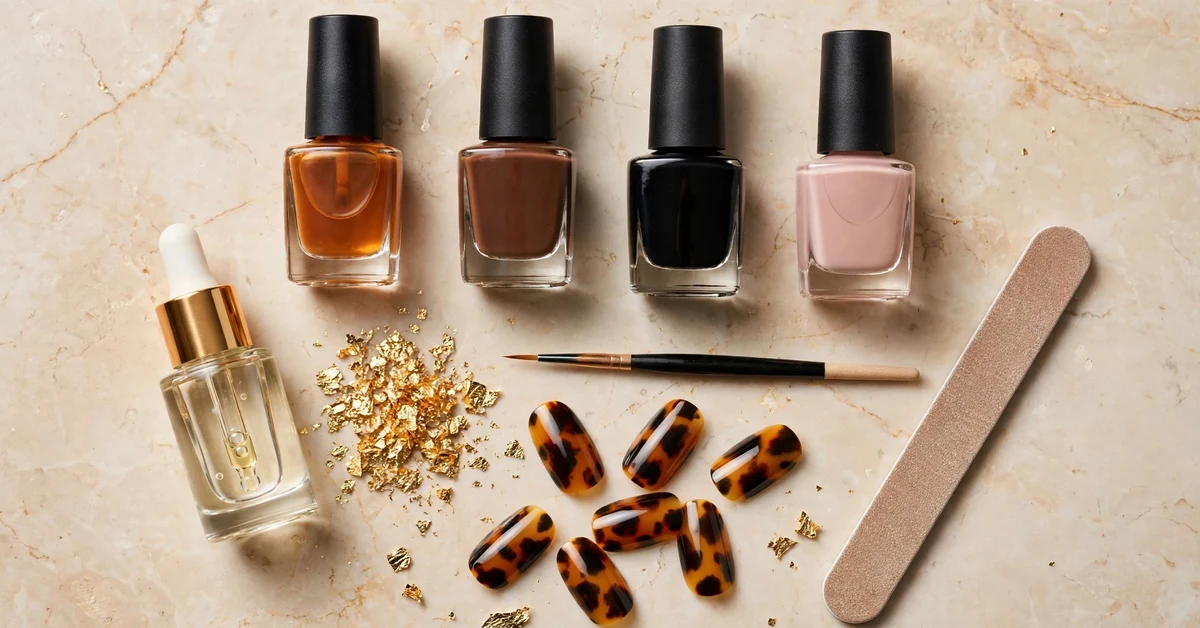
The secret to realistic tortoiseshell is layering translucent colours rather than using one flat brown. Start with a warm amber or honey jelly polish as your base layer for the tip — jelly polishes are sheer, so they let light through and create depth. Over that, add irregular blotches of a medium caramel brown, then smaller, darker chocolate or near-black spots on top. The key is irregularity: vary the size and placement of the blotches, leave some amber showing through, and avoid symmetrical patterns. When the layers are sealed with a glossy top coat, the result has a glassy, almost three-dimensional depth.
Step-by-Step Guide to the Look
Begin with careful preparation. Remove old polish, gently push back your cuticles, and file your nails into a soft almond shape. Buff lightly, wipe away dust and oils, and apply a base coat. Then paint two thin coats of your sheer nude-pink polish over the whole nail and let them dry completely. This nude base is the canvas for everything that follows, so take your time and keep the coats thin and even. A streaky base will show through the translucent tip layers, so patience here pays off.
Now build the tortoiseshell tip. Using a small brush or dotting tool, paint the amber jelly polish across the tip area, following a gentle French curve. While it is still slightly wet, or after it dries, add caramel blotches in irregular shapes, then smaller dark brown spots, leaving gaps of amber visible. You can use the tip of a dotting tool to drag and shape the blotches into organic, curved forms. Once you are happy with the pattern, paint a thin gold line along the smile line where the tip meets the nude base — a striping brush or a fine liner brush works best. Seal everything with two coats of glossy top coat, wrapping the free edge to protect the design.
Adding the Gold Accents
The gold line is a small detail that makes a big difference. It defines the edge of the French tip, adds warmth that echoes the amber in the tortoiseshell, and gives the design its luxurious finish. For the cleanest line, use a metallic gold gel polish or a striping polish with a long, thin brush, and rest your painting hand on a stable surface while you draw. If freehand lines feel shaky, you can use thin gold nail striping tape, pressed along the smile line and sealed under top coat. Gold foil flakes, pressed lightly along the line while the polish is tacky, give a softer, more textured alternative.
Beautiful Variations to Try Next
Once you master the classic tortoiseshell French tip, there are many ways to play with it. For a bolder look, paint two or three accent nails in full tortoiseshell from cuticle to tip, keeping the rest as French tips. For a softer, more romantic version, use a milky nude base and make the tortoiseshell tips slimmer and lighter, with more amber and less dark brown. A matte top coat over the whole design gives a completely different, velvety feel — try it for autumn — while an extra glossy finish makes the pattern look like polished amber stone.
You can also mix tortoiseshell with other trends. A tortoiseshell tip with a chrome gold line feels modern and glamorous, while pairing tortoiseshell nails with a single solid chocolate-brown accent nail adds depth without extra effort. For a seasonal twist, combine the design with deep burgundy or olive green on alternate nails in autumn, or with cream and gold in winter for a festive feel. The pattern is so versatile that it works as both the star of the manicure and a supporting detail, which is why nail artists return to it again and again.
Styling Your Manicure: Outfits and Jewellery
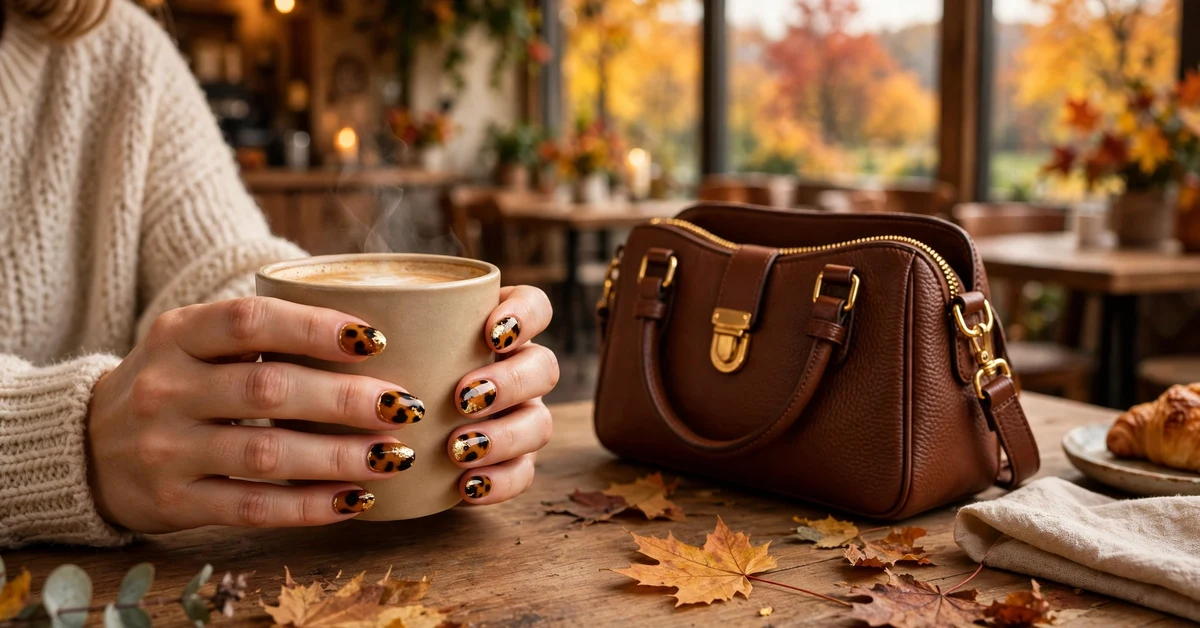
Tortoiseshell nails were practically made for autumn styling. They look beautiful with brown knitwear, camel coats, cream sweaters, and dark denim, and they pair perfectly with a classic brown leather handbag — just like in the original inspiration photo. Gold jewellery is the obvious partner: simple gold bands, a twisted rope ring, and delicate gold hoops all echo the gold line on the nails. The warm tones also work beautifully with animal print, as long as you keep the print to one piece, such as a scarf or shoes, so the overall look stays chic rather than loud.
Salon vs DIY: What to Ask For
At the salon, show your nail artist a reference photo and describe the design clearly: soft almond shape, sheer nude-pink gel base, tortoiseshell French tips in amber and dark brown, and a thin gold line along the smile line. Ask them to keep the tortoiseshell pattern irregular and organic, with visible amber showing through, rather than a uniform leopard print — the two patterns are often confused, but tortoiseshell is softer and more blended. Because the pattern is built in layers, allow extra time beyond a standard French manicure, and expect the artist to work nail by nail.
Doing tortoiseshell at home is very achievable, especially with jelly polishes. The forgiving, irregular nature of the pattern means mistakes are hard to spot — a blotch in the wrong place just looks like part of the natural variation. Practice on a nail wheel first to get a feel for how the colours layer, and keep your brushes and dotting tools clean between colours so the amber stays clear. If layering feels tricky, tortoiseshell nail wraps or press-on nails in the pattern are a quick shortcut that still looks polished, especially when finished with a gold line painted along the tip edge.
Maintenance Tips for Long-Lasting Nails
Tortoiseshell nails are quite forgiving when it comes to wear, because the nude base hides regrowth well and the mottled tip disguises small chips better than a solid colour. Still, a little care goes a long way. Wear gloves for cleaning and washing up, apply cuticle oil every day to keep the skin soft and the polish sealed at the edges, and avoid using your nails as tools to open packages or scrape labels. If a tip chips slightly, you can often dab on a little amber and brown polish to blend the repair, then reseal with top coat.
Frequently Asked Questions
Is tortoiseshell the same as leopard print? No, although they are often confused. Leopard print has distinct, ring-shaped spots on a contrasting background, while tortoiseshell is a softer, blended pattern of translucent amber, caramel, and dark brown layers that melt into each other like polished stone. Tortoiseshell looks more elegant and less graphic, which is why it suits a French tip so well.
Do tortoiseshell nails suit all skin tones? Yes. The warm amber and brown tones flatter fair, medium, and deep skin tones alike, and the nude base can be matched to your own nail bed. On deeper skin, a slightly richer amber and a warmer nude base look especially beautiful, while on fair skin, a lighter honey amber keeps the design soft.
How long does this manicure last? With gel polish, two to three weeks is typical, and the nude base means regrowth is less obvious. With regular polish, expect around seven to ten days with careful wear, daily cuticle oil, and a top-coat refresh every few days.
Can I wear tortoiseshell nails in summer? Absolutely. Pair them with lighter outfits — cream linen, white dresses, and gold sandals — and the warm amber tones act like a beautiful neutral. If you want a lighter summer version, use more honey amber and less dark brown in the pattern.
Final Thoughts
Gorgeous tortoiseshell almond nails prove that brown nails are anything but boring. With their warm amber depth, glossy nude base, and fine gold line, they feel timeless, chic, and quietly luxurious — the kind of manicure that goes with everything you own and earns compliments everywhere you go. Whether you book a salon appointment with your reference photo in hand or try the layered jelly technique at home, this is a design worth adding to your saved list. Try it this season, pair it with your favourite gold rings and a brown leather bag, and enjoy a manicure that feels as classic as it looks.