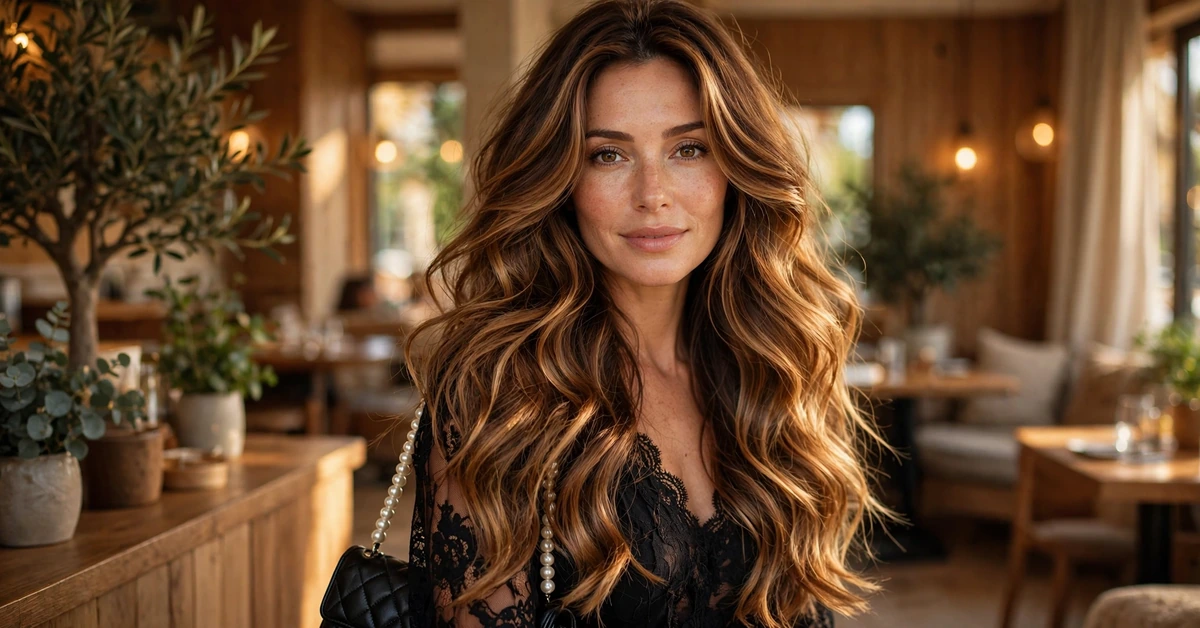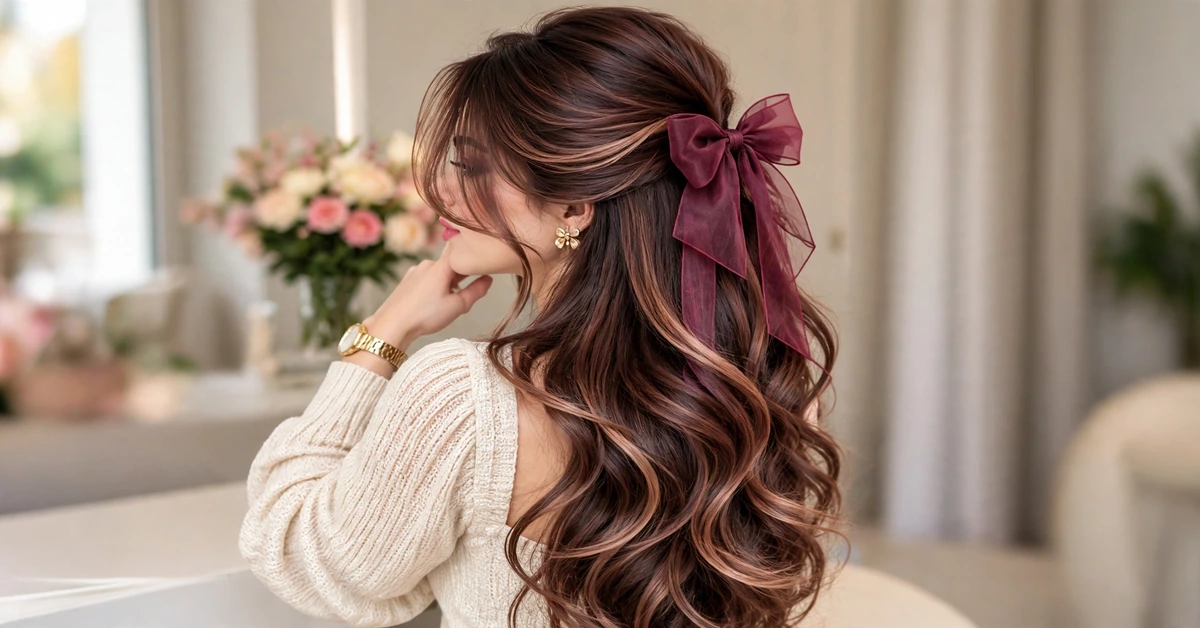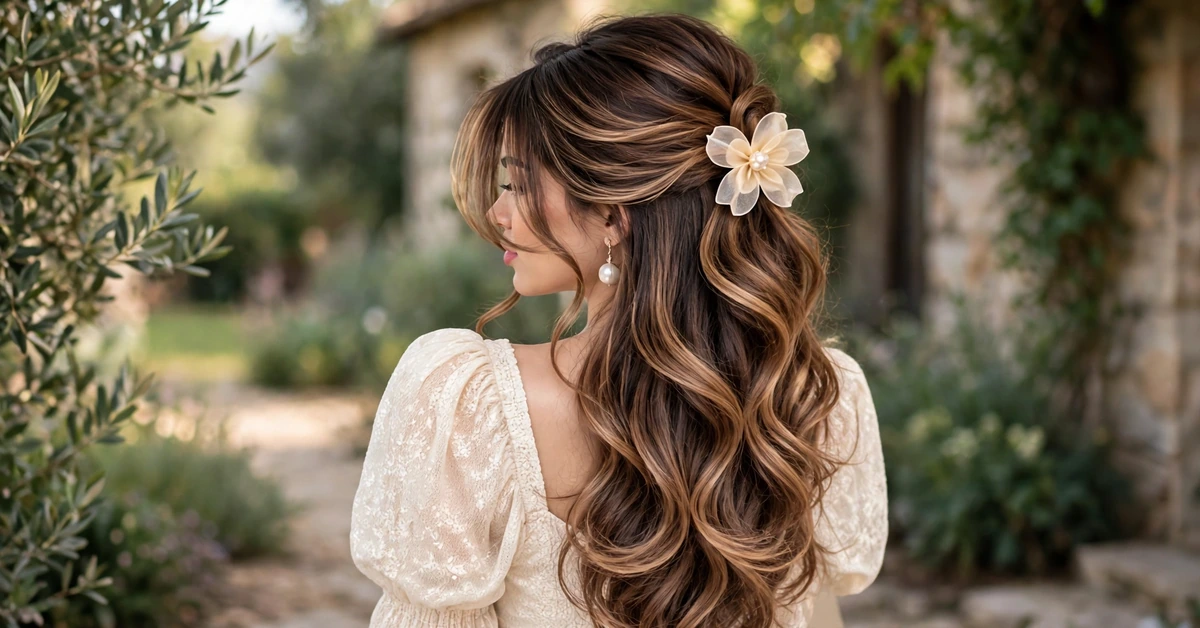

There are hair colours that turn heads, and then there are hair colours that quietly make everyone ask where you had your hair done. Champagne blonde balayage with long soft waves belongs firmly in the second group. It is the shade that looks like golden hour caught in your hair: creamy golden highlights melting into soft beige-blonde tones, grounded by subtle darker roots that keep the whole look natural, dimensional and effortlessly expensive. Paired with long, flowing waves and a simple half-up finish, it is polished without ever looking overdone, and it is no surprise that this look has become one of the most saved blonde balayage ideas on Pinterest. This guide covers what makes it work, who it suits, how to ask for it, and how to keep it fresh.
Table of Contents
- What Is Champagne Blonde Balayage?
- Why This Colour Looks So Expensive
- Who Does Champagne Blonde Suit Best?
- How to Ask Your Stylist for This Look
- Step-by-Step: Creating Long Soft Waves at Home
- The Half-Up Claw Clip Styling
- Variations to Try
- Maintenance and Colour Care
- Frequently Asked Questions
- Final Thoughts
What Is Champagne Blonde Balayage?
Champagne blonde is a warm, golden blonde with a soft, bubbly brightness, like the pale gold of a glass of champagne. It sits between honey blonde and beige blonde: warmer than ash, softer than platinum, and far more wearable for everyday life. Balayage is the freehand painting technique your stylist uses to sweep colour through the hair, concentrating lightness through the mid-lengths and ends while leaving the roots darker and more natural. The result is a seamless gradient with no harsh lines and no obvious regrowth line.
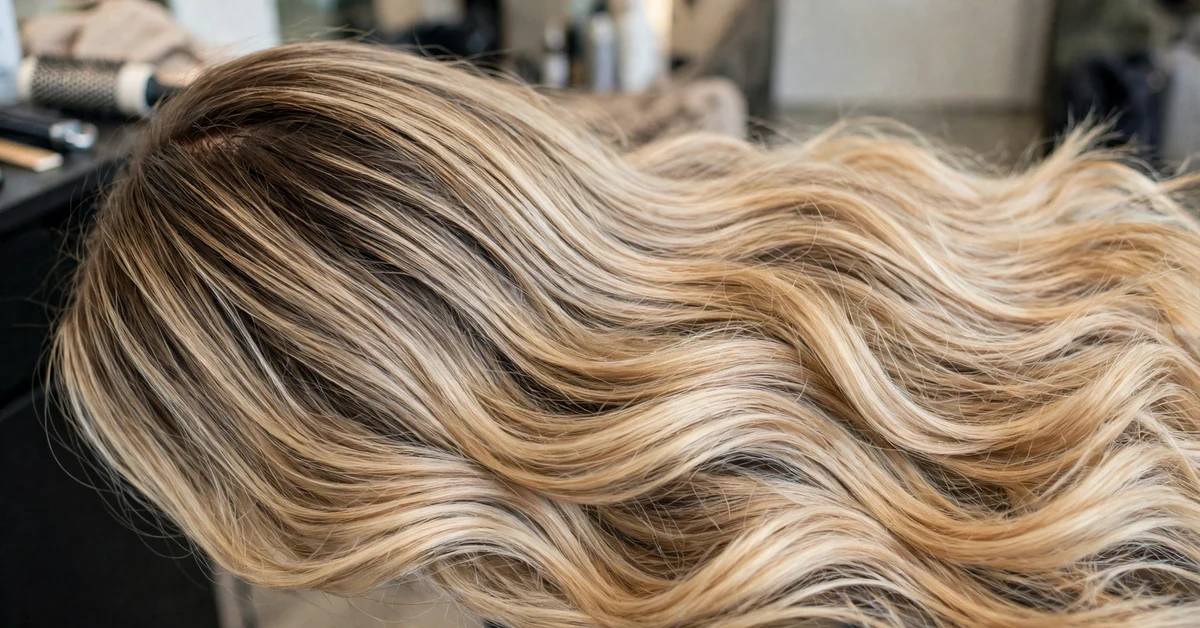
In this look, the champagne tones are layered over a darker blonde base. Creamy golden highlights add warmth and light, soft beige-blonde pieces keep the colour from turning brassy, and the darker roots add depth and shadow. That combination is what creates dimension: the eye reads light and shade moving through the hair, which makes long hair look thicker, healthier and more alive. It is a colour that moves beautifully, which is exactly why it pairs so well with soft waves.
Why This Colour Looks So Expensive
The phrase expensive-looking hair comes up again and again with this shade, and it is not an accident. First, the colour is multi-tonal. Flat, single-process blonde can look harsh and one-dimensional, but champagne balayage blends at least three tones: a darker root, a golden mid-tone and a creamy, lighter end. That blend mimics how hair lightens naturally in the sun, so it reads as healthy and natural rather than artificial.
Second, the darker root does a lot of quiet work. It gives the colour depth at the crown, frames the face softly, and means the grow-out is graceful instead of obvious. Third, the finish matters. Long soft waves catch the light at every turn, so the golden and beige tones shimmer as the hair moves. Add a gloss or toner, and the hair reflects light like polished glass. Simple, understated styling lets the colour do the talking, and that restraint is the hallmark of an expensive-looking finish.

Who Does Champagne Blonde Suit Best?
Champagne blonde is wonderfully versatile, but it shines brightest on certain bases. If your natural hair is dark blonde, medium brown or light brown, your stylist can usually lift you to champagne tones without pushing the hair to platinum, which keeps the hair healthier and the colour warmer. It also suits warm and neutral skin tones beautifully, because the golden tones echo the warmth in the skin and create a soft, glowing effect.
If you have a cooler skin tone, you can still wear this look: ask your stylist to lean the formula slightly more beige than golden, so the colour stays soft rather than yellow. Long and medium-length hair shows off balayage best, because there is enough length for the gradient to unfold, but the colour also works on a long bob if the waves are kept soft. If your hair is very dark, be prepared for a gradual journey: two or three sessions may be needed to reach champagne blonde safely, and your stylist may suggest starting with a darker golden balayage and lightening it over time.
How to Ask Your Stylist for This Look
The best salon visits start with a clear picture and a clear conversation. Save reference photos of this exact look and show your stylist the root depth, the golden mid-lengths and the creamy ends separately, so they can see the whole gradient rather than just one tone. Use these words: champagne blonde balayage, soft beige-blonde tones, creamy golden highlights, subtle darker roots, long soft waves, dimensional and natural-looking.
Ask important questions before the colour starts. How many levels of lift will my hair need? Will you use a toner or gloss, and what shade? How should we protect the hair during lightening, for example with a bond builder? How often will I need a toner refresh? A good stylist will be honest about what your hair can achieve in one session and will plan a safe route to the shade. Also talk about your routine: if you wash your hair daily, swim often or use a lot of heat, say so, because all of these affect how long the colour lasts and how much maintenance you will need.
Step-by-Step: Creating Long Soft Waves at Home
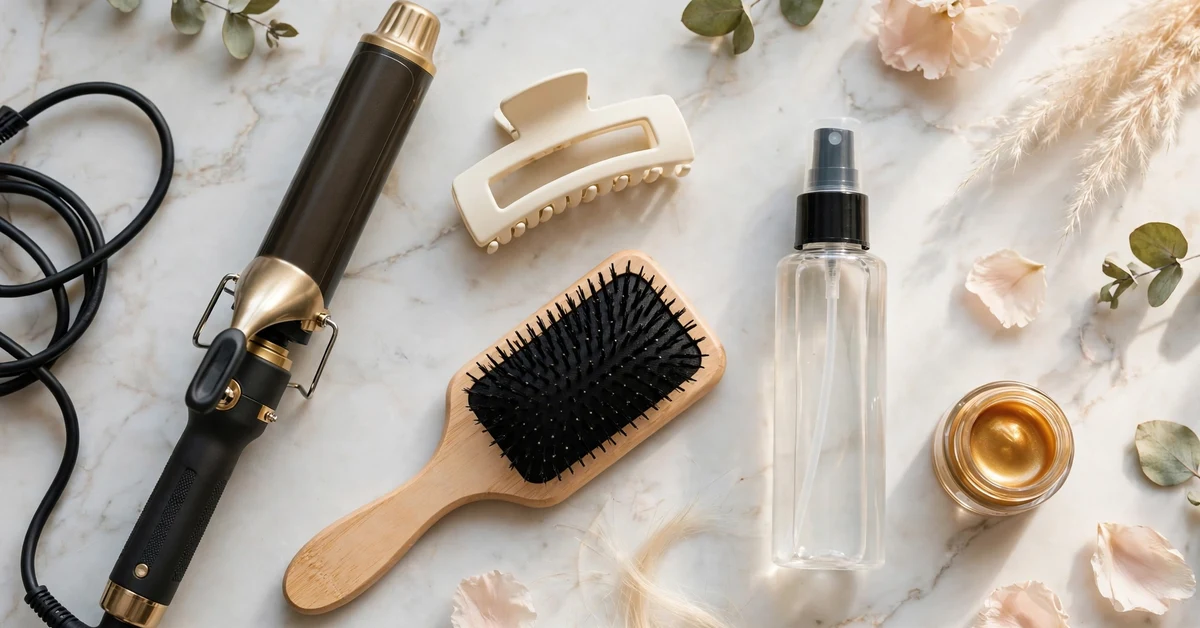
You do not need a salon visit to get these waves. Start with clean, fully dry hair and apply a heat protectant spray from mid-lengths to ends. Divide your hair into four sections: two at the back and one on each side. Use a large-barrel curling iron, around 32 to 38 millimetres, because a wide barrel creates soft waves rather than tight curls. Wrap each section around the barrel away from your face, hold for eight to ten seconds, then release and let the curl cool completely before touching it. Cooling is what sets the wave.
Work through all four sections the same way, alternating the direction of the last few pieces near the face for a natural finish. Once every section is curled and cool, gently brush through the hair with a paddle brush or run your fingers through it to break the curls into soft, flowing waves. Finish with a light-hold hairspray and a drop of shine serum on the ends only. If your hair drops easily, curl slightly tighter than you want the final result to be, because the waves will relax over the first hour. On day two, refresh the waves with a quick pass of the iron on the front sections and a little dry shampoo at the roots.
The Half-Up Claw Clip Styling
The half-up claw clip is what makes this look feel so effortless. Take the top section of your hair, from temple to temple, and gently twist it back. Secure it with a large cream or tortoiseshell claw clip at the back of the crown, leaving the rest of the hair falling in waves. Pull out two soft face-framing pieces at the front and let them fall naturally. The key is softness: do not pull the top section too tight, and let the clip sit slightly loosely so the style looks relaxed rather than rigid.
This style works for almost every occasion. It keeps hair out of your face while showing off the length and the colour, and it takes less than two minutes once the waves are done. For a dressier version, curl the face-framing pieces a little more and add a touch of texturising spray at the crown for volume. For a casual day, keep the waves looser and the clip simple. A cream or neutral clip blends with the champagne tones beautifully, while a tortoiseshell clip adds a classic, polished contrast.
Variations to Try
Once you love the base colour, there are many ways to make it your own. For a brighter summer version, ask for extra face-framing highlights, sometimes called a money piece, which lightens the hair around the face and brightens your whole look. For a softer winter version, keep the roots deeper and the ends only slightly lighter, so the colour feels rich and cosy. If you want more contrast, add a few lighter, almost platinum ribbons through the ends while keeping the champagne tone dominant.
Styling variations are just as fun. Try a low, loose ponytail with soft waves, a side part for extra volume at the crown, or loose braids left in overnight for heat-free waves the next morning. A centre part gives a sleek, polished feel, while a deep side part adds drama and volume.
Maintenance and Colour Care
Balayage is one of the lowest-maintenance colour techniques, but a little care keeps champagne blonde looking its best. Wash with a sulfate-free shampoo made for colour-treated hair, and use lukewarm rather than hot water, which strips colour faster. Use a purple shampoo once every two to three weeks if you notice warm or yellow tones creeping in, but do not overuse it, or the colour can turn dull or ashy. A weekly deep-conditioning mask keeps long hair soft and shiny, and a gloss or toner refresh at the salon every six to eight weeks restores the champagne tone.
Protect your hair from heat and sun. Always use a heat protectant before styling, keep your iron at a moderate temperature, and wear a hat or a UV-protectant spray in strong sun, which can fade blonde tones. Trim the ends every eight to ten weeks to keep the waves looking healthy, and sleep on a silk or satin pillowcase to reduce breakage and frizz. With this routine, most people find their balayage looks beautiful for three to four months between full colour appointments, needing only a toner and a trim in between.

Frequently Asked Questions
How long does champagne blonde balayage last?
Because the roots are left darker, balayage grows out gracefully. Most people enjoy the colour for three to four months, with a toner refresh every six to eight weeks to keep the champagne tone bright and even.
Will champagne blonde damage my hair?
Any lightening affects the hair, but balayage is gentler than a full-head bleach because only selected sections are lightened. A bond builder during colouring, regular masks and careful heat styling all help keep long hair strong and healthy.
Can I get this colour on dark brown hair?
Yes, but it may take more than one session. Your stylist can build the colour gradually, starting with a golden brown balayage and lifting it toward champagne over two or three visits, which protects the hair and gives a more natural result.
How do I stop my blonde turning brassy?
Use a purple shampoo sparingly, wash in lukewarm water, protect your hair from sun and chlorine, and book a toner refresh when warmth starts to appear. A gloss treatment at the salon is the quickest way to restore a cool, creamy champagne tone.
Is this look good for everyday wear?
Absolutely. The darker roots mean low maintenance, the waves are easy to recreate, and the half-up clip style takes minutes.
Final Thoughts
Champagne blonde balayage with long soft waves is popular for a simple reason: it looks beautiful, natural and expensive without demanding constant salon visits. The blend of creamy golden highlights, soft beige-blonde tones and darker roots gives long hair depth, movement and glow, while the soft waves and half-up finish keep the whole look effortless and feminine. Whether you are planning a salon transformation or recreating the waves at home, save this look, show your stylist the gradient you love, and enjoy hair that catches the light from every angle. It is the kind of colour that never really goes out of style, because it is built on what suits real hair best: softness, dimension and shine.